
It perhaps comes as no surprise to learn that this segment of the worldwide market is predicted to be worth $333.4 billion, by 2026.
So does this mean competition will further intensify for traditional banks also hungry to engage this attractive demographic? Or are new opportunities emerging?
Appealing to consumers’ hunger for speed and instant gratification – especially among a Gen Z audience – neobanks have seemingly mastered the ease of acquisition. It’s no secret that sleek app interfaces, rapid account opening processes and basic budgeting tools or cash incentives, offer rational benefits that meet these customers’ baseline expectations.
However, this strong opener is rarely enough to foster longer-term loyalty, especially among a generation generalised as being ‘switch happy’.
Recognising this challenge, industry reports rich with trend analysis, consumer insights and market predictions, continue to urge banks to remember the need for ultra personalisation, omnichannel experiences and cut-through digital marketing.
But looking at 2026 and beyond, there are wider priorities for financial services marketing leaders to focus on too. Here are three additional key areas to consider, with some global inspiration along the way…
In any marketing strategy, education and thought leadership contributes to a sense of authority, which in turn builds trust – athat Gen Z are particularly considered to value. This is especially relevant in financial services, even if the education process itself is changing.
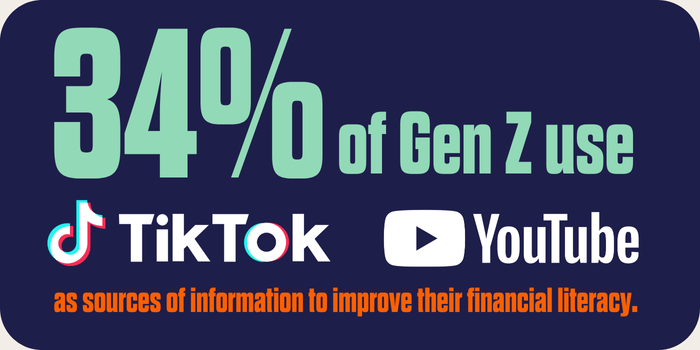
While Gen Zs are stereotyped as exhibiting poor spending habits, data also points to their efforts to budget and save more responsibly than some older consumers. While many refer to friends and family for advice, research by W1TTY found that 34% of Gen Z use TikTok and YouTube as sources of information to improve their financial literacy.
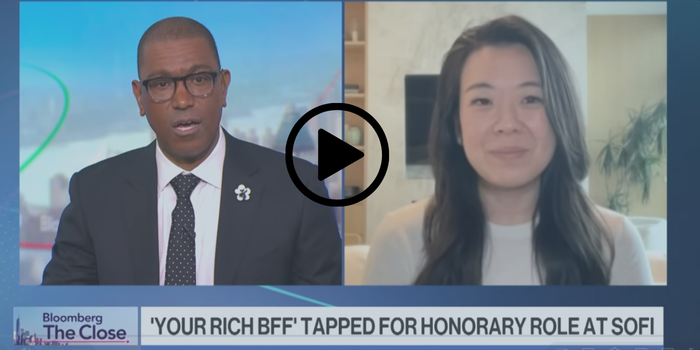
It’s therefore an extremely savvy move by the USA’s fintech brand SoFi Technologies, to hire content creator, author, educator and former Wall Street trader Vivian Tu, as the company’s first honorary Chief of Financial Empowerment.
Known as ‘Your Rich BFF’, Vivian is on a mission to make personal finance advice accessible and understandable. Her book – ‘Rich AF: The Money Mindset That Will Change Your Life’– is a New York Times bestseller, she hosts the podcast 'Chill Your Rich BFF' has a community of more than 10 million followers across her social media platforms.
Reference = https://www.youtube.com/watch?v=74nE_JH4BXg
In a Business Wire article announcing the collaboration, it is reported that Americans now carry £2.8 trillion in credit card and student debt, with only 54% expressing feelings of financial confidence. Passionate about providing practical financial advice to build people’s confidence with money, Tu will reportedly advise on SoFi’s financial literacy content and the development of educational resources. She is also set to head up a Generational Wealth Fund Initiative said to be on the horizon.
Banks and fintechs – regardless of their maturity – therefore have an opportunity to leverage their authority, share digestible advice and lean into the influencer market, to deliver empowerment benefits that could start to flip the loyalty script.
With strong social values – particularly when it comes to climate change, ethics and equality – Gen Z are likely to be attracted to financial institutions clear on their purpose and responsibilities.
A Fintech Pulse article highlights the importance of everything from mental health-aware language and ethical investment options, to community project support and rewards connected to social causes. But authenticity matters too, as this seemingly sceptical demographic will soon see through corporate social responsibility efforts that are merely a gimmick.
This presents a huge opportunity for traditional banks with deep-rooted and widely acknowledged values.

The UK’s largest building society, Nationwide, is a stellar example in this respect. Owned by its members, Nationwide has always been known for uncompromisingly focusing on the needs of its customers, rather than shareholders. That means that its purpose-driven stance isn’t simply a brand motto – it underpins the entire existence and operation of this financial institution.
Vocal and accountable when it comes to its social and public responsibilities, Nationwide is committed to investing in communities. Not only does it give at least 1% of its pre-tax profit to charities. Nationwide’s Fairer Futures initiative is just one example evidencing the brand’s intrinsic dedication to children and their families.
Recognising that 31% of all UK children live in poverty, the building society has outlined its goal to provide practical and emotional support to 100,000 children, young people and parents experiencing financial hardship. In the run up to Christmas, Nationwide also pledged to match fund any ‘secret santa’ customer donation up to a total of £200,000, in an initiative with Action for Children – the charity driven by love.
This is not merely a marketing stunt designed to pull at customers’ heartstrings. It feels more like a movement, aligned perfectly with the core purpose and family values of the building society itself.
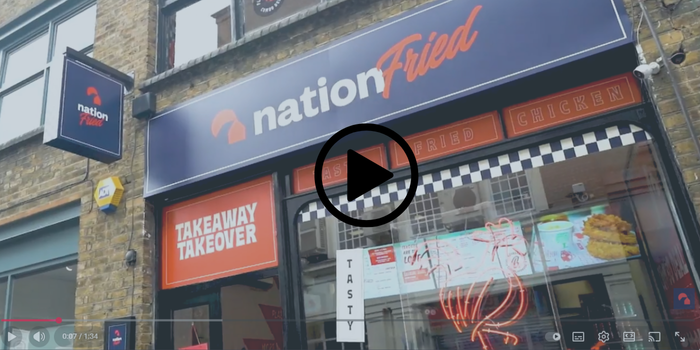
This will have undoubtedly helped contribute to the acclaim of its ‘NationFried on tour’ campaign too, which saw food trucks turn up at UK universities to serve free breakfasts and merchandise to thousands of hungry students embarking on their next chapter of life, away from home. Collaborating with TV personality Olivia Atwood and viral social media star Joe Baggs, this 140 year old brand dominated freshers week. Admittedly an effort to attract new customers to the perks of its FlexStudent bank account, the initiative continues Nationwide’s commitment to supporting young people during another challenging – yet important – time in their lives.
Reference = https://www.youtube.com/watch?v=5EEnRRHEU-8
More established financial institutions come armed with decades of experience trying to secure the lifetime value of the customer. The need to deepen relationships is therefore not a new challenge for traditional banks – it’s a priority they have worked hard to protect, for years.
So, while the demands of this target market may feel new, and the competitive landscape is constantly changing, the ‘mission’ remains the same.
Strategies need to evolve too of course, something acknowledged by the historic financial institution, Banca di Asti.
With 210 branches across northern Italy, and a heritage dating back to 1842, Banca di Asti embarked on a strategic renewal journey to win over Gen Z, back in 2023. The goal was to rejuvenate the brand's perception, overcoming the image of a traditional bank and demonstrating its capacity for innovation and adaptation.
Entrusting TLC with the project from end-to-end, we devised a disruptive and unconventional concept, far removed from typical banking communication, with creativity tailored to this youthful target audience.
Split into two parts, the first phase centred on incentivising the opening of new current accounts. Deep customer listening and a detailed analysis of the purchasing behaviours of this demographic helped TLC design a highly-customised reward solution, based on the pillars of transversality, simplicity, and immediacy.
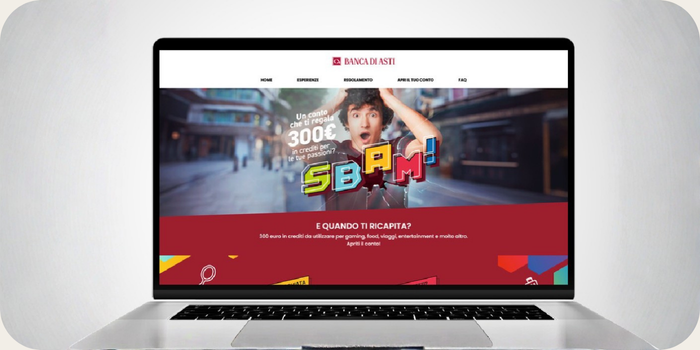
Thanks to TLC’s extensive rewards experience and global partner network, Banca di Asti was able to offer young current account holders a substantial €300 in credits to spend on a wide range of activities designed for them. This high perceived value of this reward – which would have been impossible to offer with cashback of the same amount – shouts "SBAM!", hence the campaign's name and visual identity.
Credits were delivered in two tranches, to support acquisition and retention efforts, and the results spoke for themselves. The Italian bank saw a 65% increase in new current account openings, with a 96% retention rate.
Given the success of the first campaign, the second iteration saw TLC analyse all campaign elements to optimise every touchpoint and further consolidate the brand’s presence among the Gen Z demographic. Again, daily current account openings surged by 60% – 16% above the target for the campaign – and work is now underway for project three.
The case study can be downloaded in full:
One size does NOT fit all
Rethinking the approach to compete with neobanks is nothing new, and global marketing leaders will need to stay alert in 2026 and beyond, not least in the face of continually squeezed budgets.
But as so many of the examples here highlight – the desire for emotional connection still matters to this demographic.
One of the biggest blockers to delivering powerful emotional benefits is often the perceived difficulty of personalising rewards at scale. Yet armed with rich spending data, banks have a goldmine of insights into the experiences that will be most useful, valuable, and memorable for their customers.
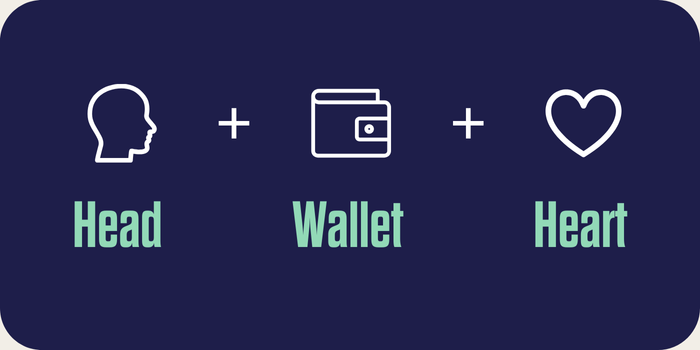
TLC’s long-standing advice when it comes to competing in disruptive markets, remains especially true for global financial services brands. To compete with the ever-agile neobanks, traditional institutions must implement a holistic loyalty strategy that appeals to every part of the customer – the head, the pocket, and the heart. We call this the Loyalty Benefits Trinity, and as the above insights show, this is just as applicable when attracting, engaging with, and retaining Gen Z customers:
- Rational benefits: Target the head, e.g. through practical yet accessible advisory services that educate and empower customers, simplifying their financial life while improving their financial literacy.
- Financial benefits: Appeal to the pocket, e.g. with competitive interest rates, or rewards that genuinely offset financial pressures.
- Emotional benefits: Capture the heart through tailored, personalised rewards that demonstrate understanding of their life stage, interests, and the social issues that matter to them. This is so often the true differentiating factor.
If you want to discuss anything – from refreshing your current programs to a complete overhaul of your Gen Z strategy – we’re here to help.
Collaborating with an experienced rewards specialist like TLC, makes this curation process frictionless. We help global financial services brands create more valuable, exciting, personalised and unique programs that increase customer acquisition, boost engagement and drive loyalty.
Our rewards partner ecosystem provides access to over 100,000 global rewards, spanning travel, wellness, entertainment, and dining. Furthermore, our proprietary COSMOS platform monitors participation and redemption, allowing you to ensure your loyalty spend is based on tangible evidence, not presumption.